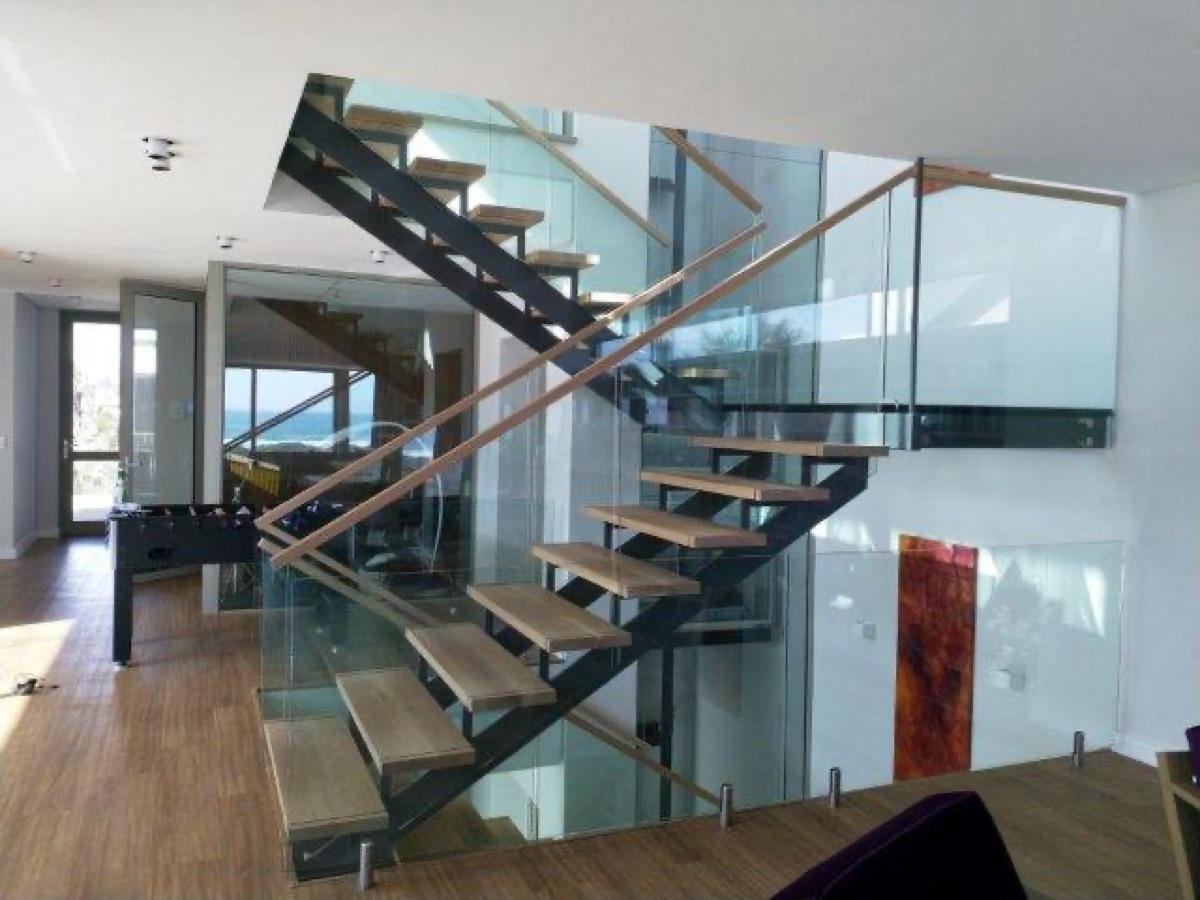
Work with the floor plan, not against it
The opening available for a staircase in a Clifton apartment is rarely generous. That limitation shapes everything: the rise and going, the stringer profile, the balustrade depth. In practice, this often leads to cleaner design decisions — there is no room for unnecessary detail, so every element has to earn its place.
Steel makes it possible to carry a flight with a very slender structural profile. A single central stringer, or a pair of side stringers reduced to the minimum structural section, keeps the visual weight low and preserves the sightlines that make these apartments worth living in.
Materials and coastal exposure
Mild steel with a quality powder-coat finish performs well in most apartment settings. For balconies or staircases with direct ocean exposure, stainless steel fixings, marine-grade powder coats and careful detailing around water drainage are worth specifying from the outset — retrofitting them is more expensive and disruptive.
Timber treads remain the most common choice for Clifton commissions. French oak, engineered oak and hardwoods like Balau each respond differently to the humidity that coastal apartments experience. The tread profile, fixing method and finish all affect how the staircase ages.
The balustrade is the primary visual element
In a compact apartment, the balustrade is what you look at rather than through. Frameless glass keeps the staircase visually light and works particularly well in Clifton where borrowed light from the ocean is precious. Cable systems offer a similar transparency with a more industrial character.
The handrail detail — its section, material and fixing — is where the quality of the fabrication is most visible. A well-resolved handrail in brushed stainless steel or turned timber reads as intentional. A poorly resolved one reads as a compromise.
Have a project in mind?
Start a conversation